Best Hobbies for Entrepreneurs: Neuroscience-Backed Ways to Beat Burnout
Neuroplasticity: Your Built-In Brain Upgrade
Neuroplasticity is your brain’s ability to rewire itself—forming and strengthening new connections based on what you repeatedly do.
When you learn a new skill—coding, guitar, drawing, gardening—your brain responds by building and refining neural pathways that support that skill. Stanford Lifestyle Medicine points out that new, challenging activities can increase brain volume and help maintain cognitive health, especially when you engage in them consistently.
Leisure activities like reading, playing music, solving puzzles, dancing, and learning languages are all linked with better cognition and slower decline as we age, thanks to this same neuroplasticity mechanism.
Stress, Cortisol, and Real Recovery
Now, layer entrepreneurship on top of that. Founders report extremely high levels of ongoing stress, burnout, anxiety, and sleep disruption, which lines up with the reality of long hours, financial pressure, and constant context-switching.
Chronic stress keeps cortisol elevated, which over time:
- Impairs memory and learning
- Disrupts sleep and mood
- Increases the risk of anxiety, depression, and cognitive decline
Research on lifestyle and brain health shows that physically active, mentally challenging, and socially engaging hobbies help normalize stress physiology and support healthier neuroplasticity. In other words, they don’t just “relax” you—they change the way your brain responds to stress.
Prefrontal Cortex vs. Default Mode Network
If your brain feels like a browser with 47 tabs open, that’s your default mode network (DMN) in overdrive: rumination, self-criticism, and worry. Chronic stress makes this worse while taking your prefrontal cortex—your decision-making, impulse control, and emotional regulation center—offline.
The right kinds of hobbies flip that switch:
- Focused, skill-based activities quiet the DMN
- Movement and creative work activate the prefrontal cortex
- Over time, this supports better attention, emotional balance, and resilience
That’s why hobbies that are engaging, slightly challenging, and genuinely enjoyable are so powerful for entrepreneurs: they give your brain a different pattern to practice.
The Best Neuroscience-Backed Hobbies for Entrepreneurs
Let’s talk about specific hobbies that are especially powerful for a founder brain. You don’t need all of them—one or two, done consistently, can make a real difference.
1. Playing a Musical Instrument
Playing an instrument is one of the most globally demanding things you can ask your brain to do.
You’re engaging:
- Motor skills (fine hand movements)
- Auditory processing (pitch, rhythm, tone)
- Visual processing (reading music or watching your hands)
- Prefrontal planning (timing, coordination, expression)
- Reward circuits (mastery, progress, creativity)
Stanford highlights musical practice as an activity linked to increased brain volume, better memory, and a lower risk of cognitive impairment. Harvard echoes this by emphasizing music and movement as core ways to leverage neuroplasticity for cognitive fitness.
Entrepreneur translation: music gives your brain a “gym” where you practice focus, patience, pattern recognition, and delayed gratification—exactly the skills you need to build a company, without the existential stakes.
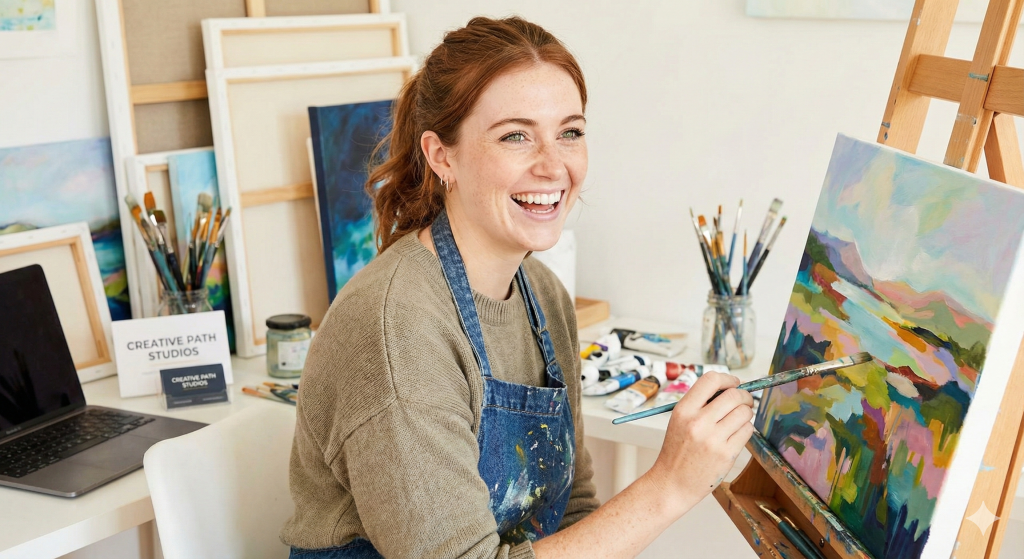
2. Drawing, Painting, and Visual Art
Art-making is one of the fastest ways to downshift your nervous system while still keeping your brain engaged.
When you draw or paint, you’re:
- Engaging visual and motor regions
- Switching into a more present-focused, sensory state
- Activating parasympathetic (rest-and-digest) responses
Art can increase brain volume and improve memory, especially when used therapeutically, and wellbeing-focused publications consistently include art among hobbies that reduce stress and improve mood.
This is ideal if you live in your head all day. Art pulls you back into your body, your senses, and the present moment—without needing words or performance.
3. Knitting, Crocheting, and Needlework
Knitting and similar crafts are basically meditation with structure.
They combine:
- Bilateral hand movement
- Repetition and rhythm
- Pattern recognition and gentle problem-solving
- Low-stakes trial and error (you can always unravel and redo)
Research on crafting shows it can improve mood and reduce stress, anxiety, and burnout, especially in people with demanding jobs. And because it’s portable and easy to pick up for 10 minutes at a time, it fits well into a founder’s fragmented schedule.
If your brain defaults to overthinking, this kind of rhythmic, tactile activity can quietly pull you out of the mental spin cycle.
4. Dance (Especially With Other Humans)
Dance is a full-system upgrade: coordination, cardio, cognition, and connection all in one.
It typically involves:
- Learning and remembering sequences
- Coordinating your body to music
- Reacting in real time (especially with a partner or group)
- Getting your heart rate up and blood flowing to the brain
Neuroscience and lifestyle research repeatedly highlight aerobic movement and social connection as two of the strongest levers for brain health and mood. Dance happens to combine both—plus fun, which your nervous system remembers.
For entrepreneurs who feel isolated or stuck in their heads, dance is a way to practice agility, play, and connection at the same time.
5. Puzzles, Board Games, and Strategy Games
These are your low-risk labs for decision-making.
Mentally demanding games and puzzles:
- Strengthen attention, planning, and flexible thinking
- Build cognitive reserve, helping your brain stay resilient
- Provide a safe environment to experiment with strategy and risk
Cognitive training studies show that consistent mental challenges can actually improve brain chemicals involved in attention and decision-making, even in older adults. For a founder, this is practice at thinking clearly under pressure—without payroll or investors on the line.
6. Gardening and Time in Nature
Gardening is deceptively powerful. It blends light movement, sensory input, and nature exposure, all of which support brain health.
You get:
- Physical activity (digging, lifting, walking)
- Sunlight and fresh air (supporting circadian health and mood)
- The psychological reward of seeing things grow because of your effort
Spending time in nature is associated with lower stress, better mood, and improved cognitive performance, and gardening is one of the most practical ways to build that into your life.
If your work feels abstract and digital, gardening gives you something real you can touch, see, and smell—a powerful antidote to screen-based stress.
7. Reading for Pleasure
Leisure reading is one of the most accessible brain-supportive hobbies.
It:
- Activates language, memory, and social cognition networks
- Provides psychological distance from your to-do list
- Trains sustained attention in a world of constant distraction
Even 20–30 minutes of fiction before bed can help you transition out of “founder brain” and into a calmer state, while still giving your brain something rich and interesting to process.
8. Running, Walking, and Cardio Exercise
If there’s one lever almost every founder underuses, it’s movement.
Aerobic exercise:
- Increases brain-derived neurotrophic factor (BDNF), which supports neuron growth
- Boosts neurotransmitters like dopamine and norepinephrine that improve focus and mood
- Improves blood flow to the brain and supports better cognitive performance for hours after a workout
Harvard and other brain-health experts consistently point to regular aerobic exercise as a cornerstone of cognitive fitness. For entrepreneurs, that means a 30–45 minute walk or run isn’t “stealing time from work”—it’s upgrading the brain you’re bringing back to your work.
How to Pick the Right Hobby for Your Current Brain
Here’s a simple way to choose:
- If you feel wired and anxious: choose rhythmic, calming, tactile activities—knitting, art, gentle nature walks.
- If you feel burnt out and foggy: choose multi-system engagement—music, dance, or strategy games that ask your brain to fully show up.
- If you feel lonely or disconnected: choose hobbies that include other humans—dance classes, group sports, board-game nights, or group gardening.
- If you’re stuck in perfectionism and rumination: choose unstructured, process-oriented hobbies like painting, gardening, or running where “good” doesn’t matter.
- If your motivation is shot: choose movement or skill-based challenges that naturally feed dopamine, like cardio, music, or complex games.
- If you’re worried about long-term cognition: layer in puzzles, reading, language learning, and music for cognitive reserve.
Think of it as matching the hobby’s “neurochemical profile” to the pattern you’re trying to shift.
Your Brain, Rewired: A Founder-Friendly Action Plan
The hustle culture version of entrepreneurship worships endless grind, short sleep, and zero hobbies—as if suffering is a prerequisite for success. Survey after survey shows that what it actually produces is exhausted, anxious, burnt-out founders.
Your brain is not built for nonstop output. It is built for cycles of challenge, recovery, and growth. Hobbies are not escapes from “real work”; they are one of the few levers that make long-term, high-quality work possible.
Here’s a realistic way to start:
- This week: Pick one hobby from this list that sparks genuine curiosity. Not the one that sounds most impressive—the one you could see yourself looking forward to.
- This month: Commit to 3–5 sessions. Note how your stress, sleep, and focus feel on days you do it versus days you don’t. Keep this low-friction and observational.
- This quarter: If you use wearables, watch trends in sleep, resting heart rate, and heart rate variability as you stay consistent. Let the data show you how your brain and body respond to real recovery.
- This year: Promote your hobby from “nice-to-have” to “non-negotiable,” right next to sleep and movement. It’s not taking time away from your business; it’s preserving the brain that runs your business.
Neuroscience is clear: your brain can become more resilient, more adaptable, and functionally “younger” if you give it 30–45 minutes a few times per week of something you enjoy that has nothing to do with your next revenue milestone.
Carpe Diem!