Kleo Case Study: How Rob Hoffman and Lara Acosta Built $60K MRR in 53 Days
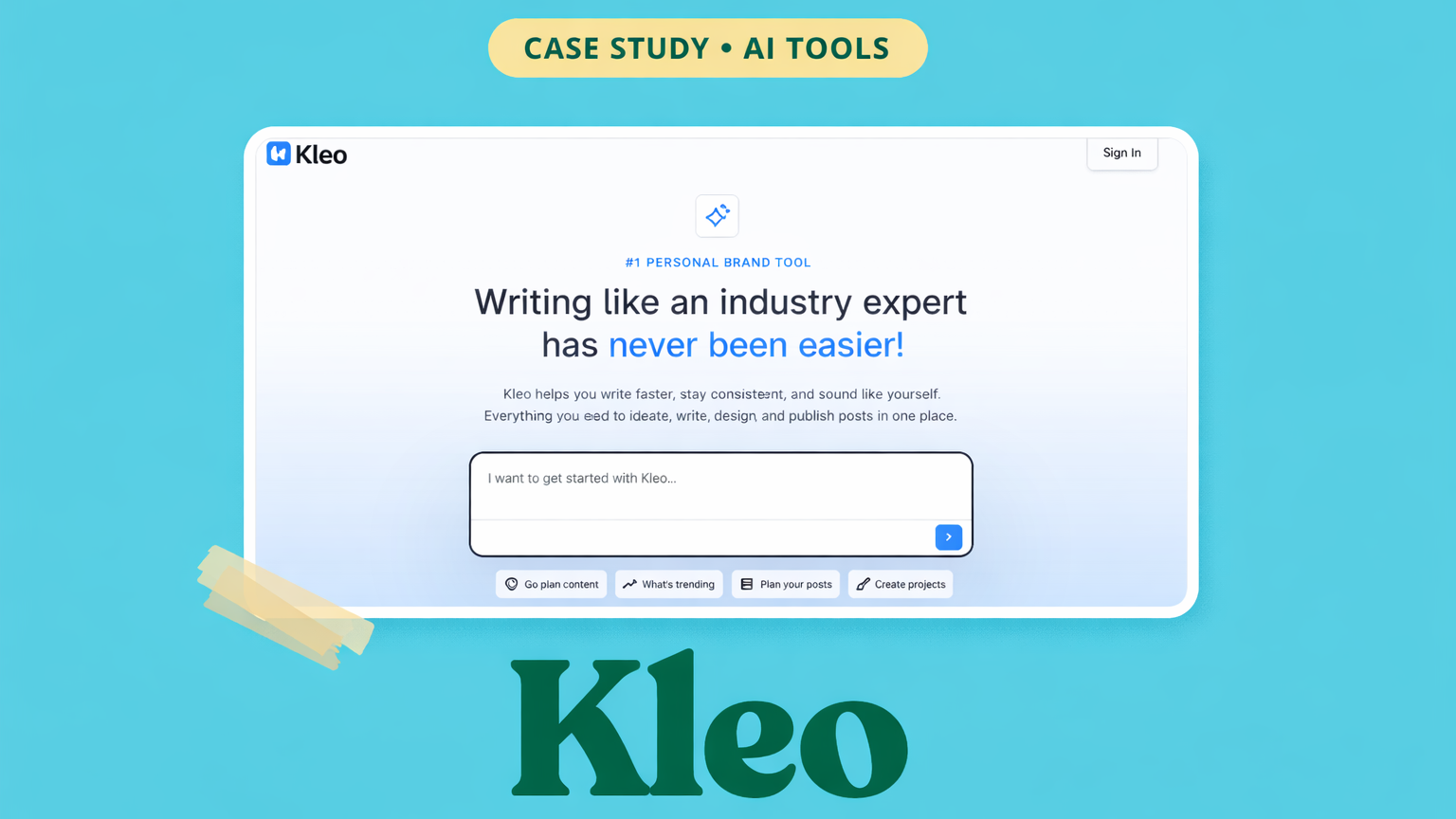
Kleo case study examines how three creators turned a weekend Chrome extension into a bootstrapped SaaS hitting $60,000 monthly recurring revenue in under two months.
What Kleo Is
Kleo is an AI writing platform built specifically for LinkedIn content creators who want to sound like themselves while scaling output.
The Founder Story
Lara Acosta is a LinkedIn creator with 310,000 followers who built her personal brand teaching professionals how to grow on the platform. She co-founded Kleo alongside Jake Ward (185K followers) and Rob Hoffman (80K followers), both established SEO and LinkedIn strategists.
Acosta previously ran LA Digital, a ghostwriting agency, and founded Literally Academy, a LinkedIn growth course. Her trajectory from posting about personal branding to building the tool itself mirrors her own audience’s pain point: creating consistent content without losing voice.
The Problem Kleo Solves
Generic AI tools like ChatGPT produce writing that sounds robotic because they’re trained on mass datasets from thousands of creators. LinkedIn creators specifically need tools that learn their tone, organize their ideas, and help them publish faster without sounding like everyone else.
Kleo targets professional creators, coaches, and founders building personal brands on LinkedIn who post multiple times weekly but struggle with ideation, consistency, and workflow.
Product Snapshot
Based on the Kleo site, the platform includes:
- Chrome extension for capturing inspiration into a swipe file
- Knowledge base for storing references and transcripts
- Writing style memory that learns user voice
- Unlimited post generation
- 20 graphic generations monthly
- LinkedIn scheduling
- 170+ top-performing post swipes, 200+ hook templates, 160+ post templates
- Weekly live coaching and private community access
Currently focused on LinkedIn with reported plans to expand to X and other platforms. Does not automate posting. Pricing is reportedly $99/month standard or $59/month (reported founder lifetime deal during launches, per competitive analysis).
Growth Signals
Rob Hoffman documented the launch playbook:
- Built 3,500-person waitlist over six weeks before launch
- Hit $19,055 MRR in 30 days (later scaled to $60K+ MRR in 53 days per interview)
- Beta cohort of 500 people with no free trial, 50% launch discount
- Zero paid ads, no cold outreach
- 250+ customers with founder phone numbers for direct support
Reported funding status: bootstrapped (no venture capital disclosed).
Monetization Model
Kleo operates on a subscription SaaS model. Standard pricing reportedly $99/month, though competitive sources cite founder pricing at $59/month lifetime during launch windows. No free trial currently offered.
Revenue likely driven by monthly subscriptions plus potential upsells to community coaching and agency-level features (multi-profile support is “coming soon” per site).
What’s Smart About the Strategy
Founder-led growth: All three co-founders are established LinkedIn creators with 575,000 combined followers. They built in public, demonstrating the product on their own content. This is audience-first distribution.
Audience timing: They launched when AI writing tools were trending and LinkedIn creator economy was maturing. They didn’t create demand, they rode an existing wave.
Waitlist psychology: Requiring payment from day one with no trial filtered for serious buyers and validated demand before heavy development.
Customer intimacy: Giving 250+ customers direct cell phone access creates loyalty and generates product insights competitors can’t match at scale.
Positioning: “ChatGPT trained on you” is a crystal-clear differentiator. They didn’t compete on features, they competed on personalization.
Risks and Limitations
Platform dependence: LinkedIn-only focus creates vulnerability if LinkedIn changes algorithms, policies, or launches competing features. X integration is “coming soon” but not live.
Founder brand risk: Growth is tightly coupled to co-founder audiences. If any founder pivots or loses credibility, it impacts the product.
Pricing clarity: Reported pricing varies across sources ($59 vs $99/month), and limited public information about tiers creates confusion.
Competition: Tools like Supergrow, Taplio, and AuthoredUp offer similar LinkedIn workflows at lower price points ($19-$39/month per competitive analysis).
No free trial: Eliminates low-intent users but also creates friction for qualified buyers who want to test voice learning.
Takeaways for Bloggers and Solopreneurs
Build your audience before your product. Jake Ward originally created the Chrome extension for himself. The validation came from other creators asking to use it. Your audience tells you what to build.
Launch with a waitlist, not a beta. 3,500 signups before launch created urgency, social proof, and day-one revenue. Waitlists also let you gauge demand without heavy dev investment.
Your biggest competitors are paid advertising budgets. Kleo’s zero-ad strategy works because founders have distribution. If you don’t have an audience, you’re buying one.
Customer access scales loyalty, not efficiency. Rob Hoffman gives customers his cell number. This doesn’t scale, but it builds fanatical users who refer others and provide product insights.
Ride waves, don’t create them. AI tools and LinkedIn growth were already trending. Kleo positioned inside existing demand rather than trying to educate a cold market.
Much of this rapid growth can be attributed to strong personal brand positioning that amplified credibility and accelerated user adoption.